
BUILDING & COMPLIANCE RESOURCES
How to Assess Your School’s Building Needs Over the Holidays
A practical guide to using quieter periods in the school calendar to review your estate, identify priorities and plan building improvements with greater confidence.
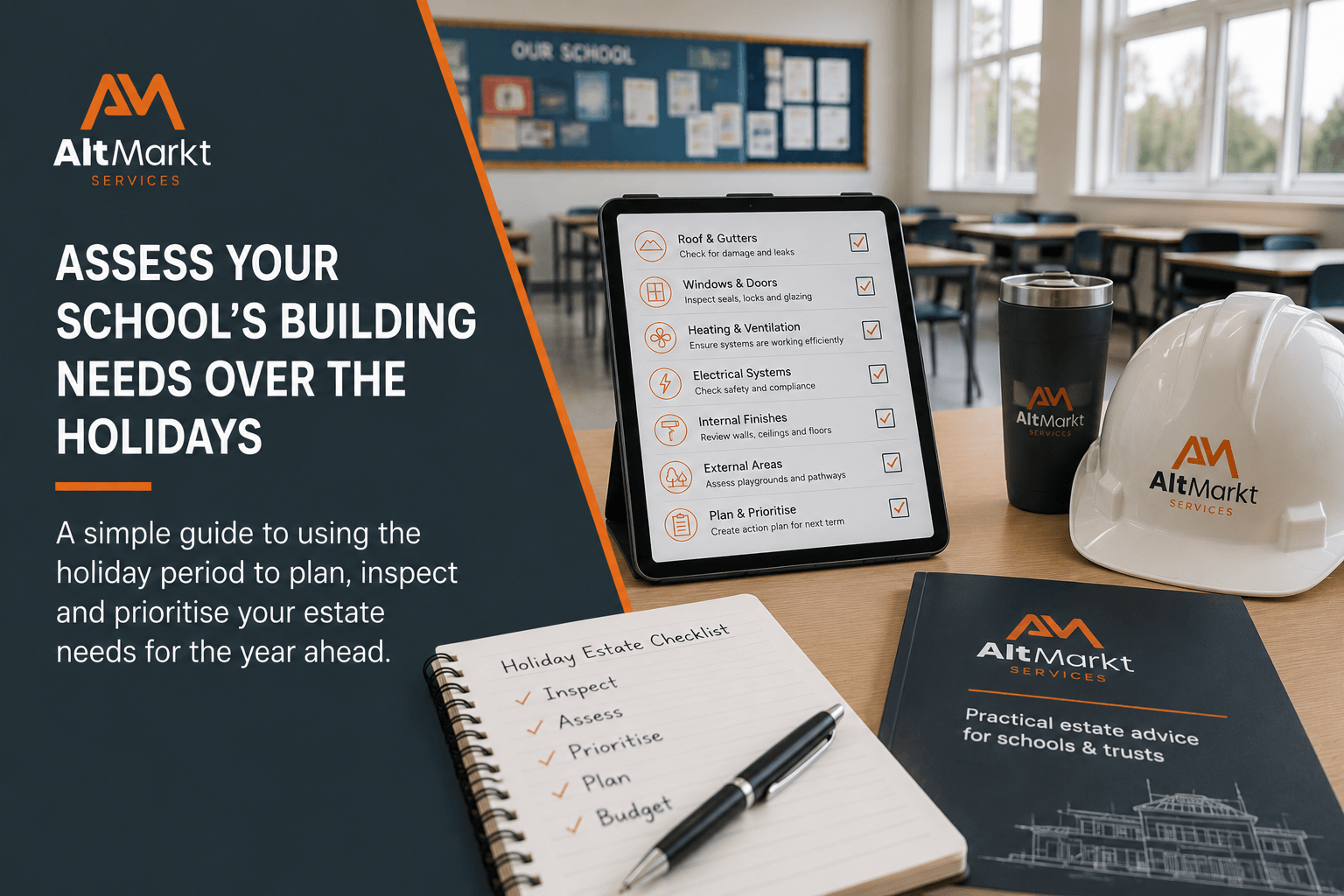
Using quieter periods to understand your school estate
School holidays provide one of the best opportunities to assess your estate without the day-to-day pressures of a busy school. Empty classrooms, quieter corridors and improved access make it easier to identify building issues, review priorities and plan future investment.
A structured school building assessment does not need to be complicated. It simply gives leaders, site teams and governors a clearer understanding of what needs attention now, what should be monitored and what may need to become part of a longer-term estate plan.
Used well, the quieter holiday period can help schools move away from reactive maintenance and towards more informed estate decisions.
What should schools check during the holidays?
Schools should use quieter periods to check visible building condition, review maintenance records, speak to site teams, update statutory information and identify projects that may need further investigation. The aim is not to solve every issue immediately, but to build a clearer picture of estate priorities.
This information can then support future maintenance planning, capital funding decisions and wider Estate Strategy & Planning Services.
1. Start with a walkaround of your site
A simple site walkaround is often the best starting point. Because the school is calmer, you may notice things that are harder to see during term time.
Look carefully at both internal and external areas. Focus on visible condition, recurring defects, water damage, access issues and any areas where building performance appears to be affecting use.
Useful areas to check include:
- Roof condition, slipped tiles, flat roof surfaces and blocked gutters.
- Signs of damp, leaks or water staining.
- Wear and tear to windows, doors and external finishes.
- Condition of fire doors and internal circulation routes.
- Damaged ceilings, flooring or wall finishes.
- Any health and safety concerns that are easier to spot in empty spaces.
Take notes and photographs as you go. The purpose is to create a useful record, not a polished report. If more detailed technical advice is needed, Building Surveying Services can help confirm condition, risk and recommended next steps.
2. Review compliance and statutory information
Quieter periods are also a good time to check that key building records and statutory information are up to date. This helps avoid surprises during term time and supports stronger estate management.
This may include:
- Asbestos management information.
- Fire risk assessments.
- Gas and electrical certificates.
- Servicing records.
- Legionella records.
- Planned maintenance logs.
- Previous surveys, reports and recommendations.
If anything is due for review, renewal or further investigation, the holiday period may provide a useful opportunity to programme the next step before pupils and staff return.
3. Speak to your site team
Site teams often understand the estate better than anyone. They know which doors stick, which roof areas leak, which rooms overheat, which drains block and which issues keep returning.
Use quieter periods to gather their feedback. Ask about recurring problems, areas they believe need investment and repairs that have been carried out repeatedly over recent months.
This insight is often extremely useful when planning future works because it connects visible building condition with day-to-day operational experience.
4. Consider longer-term planning needs
A school building assessment should not only focus on immediate repairs. It should also help leaders understand whether the estate continues to support teaching, safeguarding, accessibility, energy performance and future educational priorities.
Useful questions include:
- Are teaching spaces still fit for purpose?
- Are there areas where energy efficiency could be improved?
- Are there recurring condition issues that need a planned response?
- Are any buildings nearing the end of their useful life?
- Are there projects that may require funding, feasibility work or options appraisal?
- Could future works be coordinated to reduce disruption and improve value?
Having a clear sense of longer-term priorities makes future budget planning, funding readiness and capital investment decisions much more effective.
Where schools need to compare different routes before committing to a project, Consultancy & Options Appraisal Services can help test options and identify a practical way forward.
5. Capture everything in a simple summary
Once you have gathered information, create a simple summary that can be shared with senior leaders, governors, trustees or the trust estates team.
The most useful summaries usually separate issues into:
- Urgent priorities requiring early action.
- Medium-term needs that should be planned and monitored.
- Longer-term strategic improvements that may require funding, feasibility or wider estate planning.
This helps decision-makers understand where focus is needed and supports clearer planning for the next term, the next financial year and the wider estate strategy.
Turning observations into an estate plan
The value of a holiday building review comes from what happens next. Notes and photographs are useful, but they become much more powerful when they are turned into priorities, actions and a practical estate plan.
That plan does not need to be complicated. It should help the school understand what needs to be done, why it matters, what evidence is available and how projects could be phased over time.
For larger projects, early planning can also support Capital Funding & Investment Planning Services, allowing schools to identify what evidence may be needed before future funding opportunities arise.
How AltMarkt can support you
AltMarkt supports schools, academy trusts and public sector clients with practical, independent estate advice. We help organisations understand building condition, identify priorities and plan improvements with clearer evidence.
Support may include building condition reviews, estate strategy, options appraisal, capital funding advice and planning for future improvement projects.
AltMarkt Services is a RICS-regulated Chartered Surveying consultancy supporting schools, academy trusts, healthcare organisations and public sector estates with practical, independent advice.
Need help reviewing your school estate?
If the quieter holiday period has highlighted building issues or future estate priorities, AltMarkt can help you turn observations into a practical plan.
Explore our Building Surveying Services, Estate Strategy & Planning Services or contact AltMarkt to discuss your organisation’s next steps.